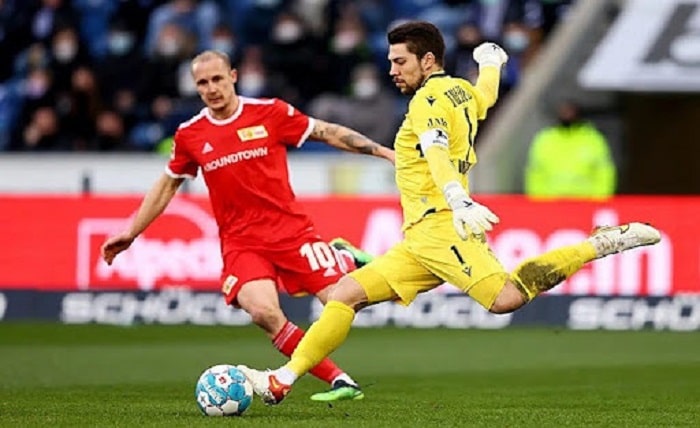
Modern football increasingly emphasizes spatial control and building play from the back. Therefore, goalkeepers are no longer expected to simply stay in front of the goal and make saves. They must also proactively move forward, support the defense, and participate in building attacks. This is why the concept of a sweeper keeper is being mentioned more frequently. So, what is a sweeper keeper, how do they differ from traditional goalkeepers, and why is this role so important? All of these questions will be answered by Xôi Lạc TV.
What Is a Sweeper Keeper?
What is a sweeper keeper? This term refers to goalkeepers who tend to proactively leave the penalty area to deal with the ball or stop attacking situations before they become genuinely dangerous.
Unlike traditional goalkeepers, who generally prioritize staying close to the goal, sweeper keepers have a wider operating range. They can move outside the penalty area to intercept passes, provide cover for center-backs, or quickly recover the ball when the defensive line has been breached.
This concept is closely associated with possession-based football and modern pressing. When the defensive line pushes high, the space behind the defenders becomes larger. The sweeper keeper is responsible for controlling that space.
For viewers who regularly follow football on Xoilac TV, the sight of a goalkeeper leaving the penalty area to clear the ball or initiate an attack is probably no longer unfamiliar.
Key Characteristics of a Sweeper Keeper
A good sweeper keeper needs to possess many qualities beyond reflexes. First and foremost, they must have excellent game-reading ability so they can anticipate situations before they happen.
Anticipation allows the goalkeeper to decide when to leave the goal. If they rush out too early, the opponent may get past them. If they react too slowly, the opposing striker may have a direct one-on-one opportunity with the goal.
Speed is also extremely important. Sweeper keepers often have to run outside the penalty area to challenge for or clear the ball. A goalkeeper with good pace has a major advantage when dealing with long balls played behind the defensive line.
Ball-playing ability is another essential quality. When the ball is circulated from the defense, a sweeper keeper must be confident enough to receive the ball, play short passes, or deliver accurate long balls.
Such situations often appear in highlight bóng đá videos, especially when goalkeepers make decisive runs outside the penalty area.
How Is a Sweeper Keeper Different from a Traditional Goalkeeper?
The clearest difference lies in their positioning. Traditional goalkeepers generally focus on protecting the goal and reacting to shots. Sweeper keepers, meanwhile, actively participate in more phases of the game.
When their team has possession, a sweeper keeper can position themselves higher up the pitch to become a third passing option alongside the center-backs. When the opposition attacks, they are ready to push forward and reduce the space behind the defensive line.
This creates a more flexible defensive system. Center-backs can push higher and maintain a compact team shape, while the goalkeeper controls the space behind them.
Xoi Lac TV is often where fans follow matches featuring pressing tactics and high defensive lines, where the role of a sweeper keeper becomes particularly evident.
Skills a Sweeper Keeper Needs
To perform well in this role, a goalkeeper needs to combine multiple skills. Reflexes remain fundamental because the primary responsibility is still to protect the goal.
However, the ability to read situations may be even more important at certain moments. The goalkeeper must quickly identify passes played behind the defensive line and decide whether to rush out.
Passing ability also plays a major role. A sweeper keeper can become the starting point for attacking moves. They need to be comfortable using both feet, playing accurate short passes, and having enough ability to send the ball beyond the first pressing line.
Mental strength is another important factor. A single mistake outside the penalty area can lead directly to a goal. Therefore, composure and decisiveness must always go hand in hand.
Fans following tructiepbongda Xoilac can easily recognize that goalkeepers with strong ball-playing abilities often play an important role in building attacks from the back.
Manuel Neuer and the Sweeper Keeper Revolution
When discussing the modern sweeper keeper, Manuel Neuer is almost certainly the most iconic name. The German goalkeeper helped change the way the world viewed the position.
Neuer became famous for his runs outside the penalty area to intercept opposition passes. In Bayern Munich’s system and for the German national team, he often positioned himself much higher than a traditional goalkeeper would.
What made him particularly impressive was that Neuer was not only strong at reading situations. He also possessed excellent ball-playing ability, accurate passing, and a highly composed mentality.
Thanks to these qualities, Neuer became a role model for many young goalkeepers. The concept of the sweeper keeper also became increasingly popular as coaches adopted possession-based and pressing styles of football.
A perfectly timed run by Neuer can quickly become a highlight bóng đá, because a single well-timed decision can be enough to prevent a clear scoring opportunity.
Manuel Neuer proactively rushes out of the penalty area in a Germany shirt
Why Is the Sweeper Keeper Becoming More Important?
The development of pressing football has made the sweeper keeper increasingly important. When the team pushes forward, space behind the defenders always exists, and opponents can exploit it with long passes.
If the goalkeeper stays too deep, opposing forwards will have more time to receive the ball and move closer to goal. In contrast, a sweeper keeper can proactively rush forward and clear the ball before the opponent gains control.
This role is particularly useful for teams that want to maintain a compact team shape. When the goalkeeper stands higher, the distance between them and the defensive line is reduced, making it easier for the team to apply pressure and regain possession.
Today, Xoilac Z is a brand associated with football content that attracts significant fan interest, including modern tactics and the performances of top stars.
Advantages and Limitations of a Sweeper Keeper
The biggest advantage of a sweeper keeper is their ability to control the space behind the defensive line. They allow the team to be more proactive when pushing forward and provide an additional option for building play.
Sweeper keepers can also support center-backs during fast counterattacks. A well-timed run forward can prevent a dangerous opportunity before the opponent gets a chance to shoot.
However, this style also carries risks. If the goalkeeper misjudges the situation or makes an inaccurate decision with the ball, the goal is almost completely exposed.
In particular, a mistake outside the penalty area can be extremely difficult to recover from. Therefore, not every goalkeeper is suited to this role.
Successful or unsuccessful sweeper-keeper moments are often widely shared by fans through highlight bóng đá, because this position can create some truly remarkable moments.
The sweeper keeper proactively leaves the penalty area to clear the ball before the opposing striker has a chance to shoot
The Sweeper Keeper in Modern Football
Today, many top coaches require goalkeepers to participate in the possession phase. As a result, ball-playing ability has become an important criterion when clubs recruit goalkeepers.
A modern goalkeeper needs more than good reflexes. They must also know how to pass, read space, and make quick decisions. These demands have significantly changed goalkeeper development.
Young goalkeepers are encouraged to train with the ball more frequently. They must become comfortable receiving the ball under pressure, passing while being pressed, and moving proactively away from the goal.
For viewers who want to tructiepbongda Xoilac, matches involving possession-oriented teams provide a good opportunity to observe the role of the sweeper keeper in practice.
How to Become a Good Sweeper Keeper
To become a sweeper keeper, a player must first build a solid foundation in reflexes and catching technique. These remain the core skills of a goalkeeper.
After that, ball-playing ability needs to be trained regularly. Goalkeepers must practice passing with both feet, controlling the ball in tight spaces, and making long passes.
Game-reading ability should also be developed. Goalkeepers should observe the positions of defenders, opposing forwards, and the movement of the ball in order to make accurate decisions.
Finally, there is mentality. A sweeper keeper must be confident enough to push forward while also knowing their own limits. Decisiveness does not mean constantly rushing out of the goal.
The Xoilac Tivi platform provides fans with a space to follow exciting matches, allowing them to directly observe how modern goalkeepers participate in the overall style of play.
Modern goalkeepers train their ball-playing and ball-control abilities
Notable Sweeper Keepers Today
Besides Manuel Neuer, world football has many other goalkeepers who adopt a proactive playing style. Ederson of Manchester City is a prominent example, known for his accurate passing and ability to initiate attacks from deep.
Marc-André ter Stegen is also a goalkeeper with impressive ball-playing ability. In Barcelona’s possession-based system, he regularly participates in the build-up.
Alisson Becker also possesses many qualities associated with a sweeper keeper. The Brazilian goalkeeper can read situations well, rush outside the penalty area, and quickly initiate attacks.
These goalkeepers demonstrate how dramatically the goalkeeper position is changing. Modern goalkeepers are no longer restricted to the area around the goal but have become an important part of the tactical system. Their saves, passes, and interceptions outside the penalty area are often followed by XoilacTV and football fans after every match.
N**otable modern goalkeepers are known for their ball-playing ability and proactive involvement in the game
Conclusion
From the analysis above, what is a sweeper keeper can be understood simply: it is a type of goalkeeper who proactively leaves the goal area to control the space behind the defensive line while actively participating in the build-up.
Matches featuring modern goalkeepers will continue to demonstrate how this position is evolving. Fans can follow tructiepbongda Xoilac to watch notable performances and discover more interesting tactical aspects of contemporary football.