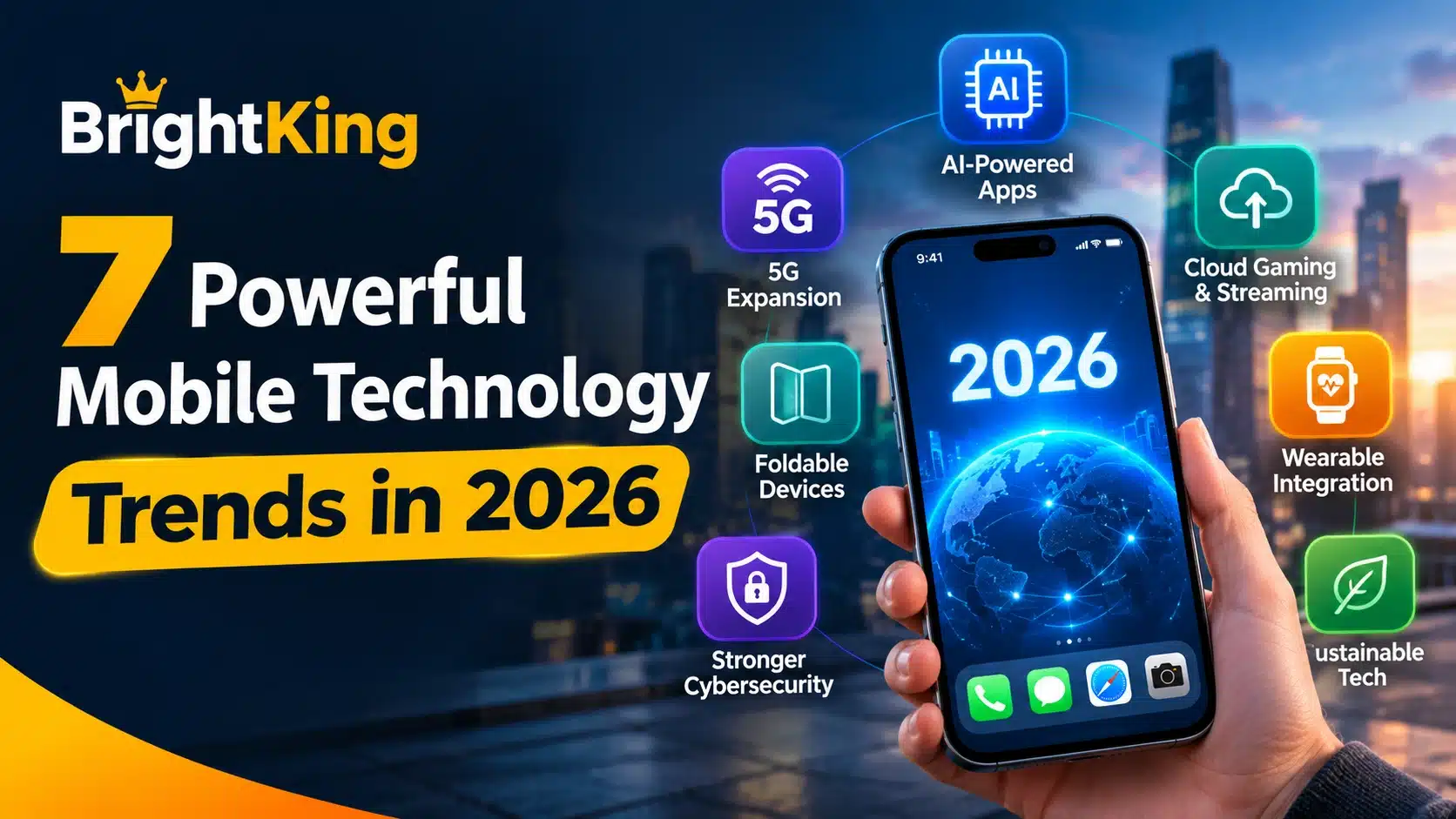
BrightKing highlights 7 powerful mobile technology trends shaping 2026. AI, 5G, smarter apps, digital payments, privacy and gaming are reshaping mobile life.
But, is your phone that “smart” or is mobile technology getting ahead of you? AI is making its way into everyday apps, connectivity is becoming smarter and payments are getting smarter and easier to make. Meanwhile, technology is becoming trickier to navigate due to privacy concerns and ever-more complicated apps. Failing to catch these changes may result in missing out on the advantages or making better informed selections of apps used. BrightKing is a collection of 7 mobile technology trends that are driving the smartphone user experience in 2026. These changes are likely to become a normal way of life when you’re using your mobile device in the future, from on-device AI to smarter gamers.
Mobile Tech in 2026
Smartphones are no longer just for calling and texting, but for basic apps as well. Mobile technology is becoming more intelligent, connected and privacy-focused in 2026, shifting the way people work, pay, play, and perform daily activities. Mobile apps and on-device capabilities are bringing AI to the users and faster connectivity allows for smoother gaming, streaming and real-time services.Digital payments are also driving more and more transactions to be conducted using smartphones in daily life.
These changes also result in new concerns. Users have to be informed of how apps use their personal information, the permissions apps ask for, and the actual utility of new features. If you’re a BrightKing reader, staying informed about these changes will help you pick the right apps, utilize new smartphone functions and make informed technology decisions. Here are seven trends that will influence the mobile experience in 2026.
1- AI-Powered Apps
In the year 2026, AI is said to be playing a considerable role in Mobile Apps. It aids in comprehending user actions, tailoring suggestions, streamlining procedures, and providing more accurate responses.
Smarter Personalization
AI can make adjustments to recommendations based on user preferences and activity. This gives more relevance to shopping, entertainment, fitness and content applications.
Faster Tasks
The information can now be summarized, the image can be edited, content can be generated, and data can be organized by using AI in fewer steps. For the users of BrightKing apps these features help them with faster and more helpful everyday usage of their mobile apps.
2- On-Device AI
On-device AI is the use of AI technology on a device without full reliance on cloud servers. This enables quick response and it can offer better privacy (storing more personal information on the device).
- Faster AI processing
- Improved privacy and control over data.Enhanced privacy and control over data.
- Comprehends very simple information from the web
- Can be used for voice control, photo editing, and translation
- New capabilities of AI on mobile devices.Enhanced AI capabilities on mobile phones.
3- Smarter 5G
In 2026, 5G will be even more than just quicker downloads. It offers low latency and enhanced connectivity, which can help ensure that games, streaming, video calls, and real-time mobile services run smoothly.
- Reduce latency, increase response times
- A smoother cloud gaming and streaming experience.
- Improved video calls and live services
- Smarter and more dependable connected devices.
- Improvements in AI for mobile apps.Enhanced Mobile App AI Support.
4- Digital Payments
In 2026, digital payments are poised to play an increasingly prominent role in mobile life. With the help of smartphones, users can pay bills, browse eCommerce, transfer money and make contactless payments with ease and speed.
- Mobile wallets and contactless payments
- Faster app-based transactions
- A biometric security and authentication system.Biometric security and authentication system.
- Better fraud detection through AI
- The demand for safe payment applications is increasing.There is a growing demand for secure payment apps.
5- Privacy First
With the addition of more personal data, mobile privacy is gaining importance. Users are increasingly mindful of app permissions, data sharing, and in-app security in 2026.
- Stricter app permissions
- Greater control of personal information.
- Biometric authentication
- Privacy-focused app features
- Better management of location and payment details.
6- Cloud Gaming
Cloud gaming allows players to enjoy quality gaming without being solely dependent on their smartphone’s hardware. The games are played on a remote server and the game action is transmitted to the device via an Internet connection.
- Designed for high-quality gaming on lower-powered phones.Optimized for high-quality gaming experience on weaker smartphones.
- 5G enhances streaming speeds.5G optimises streaming.
- Reduction of the need for large game installations.
- Supports gaming on a variety of devices
- A reliable Internet connection is vital.
7- Super Apps
Super apps are those that integrate several services, including messaging, payment, shopping, transport and entertainment, in one application. This will minimize the need to use a variety of applications to get tasks done.
- Grouping multiple services in a single application.
- Easier access to daily tasks
- Integrated payments and messages
- Personalized features powered by AI
- Top concerns about privacy and data sharing
These trends have an impact on the users.
AI-powered apps can automate repetitive tasks and provide personalized features, making daily tasks easier.
Faster experiences: 5G and on-device AI can enhance your app’s responsiveness, streaming services, and gaming.
Further convenience: Digital payments and super apps decrease the requirement for various platforms.
Enhanced gaming experience: With cloud gaming, users can access and enjoy games without the need for costly equipment.
Greater privacy requirements: Users will need to be more attentive to personal data and permissions with more connected apps.
Making smarter decisions: Users can better determine which mobile applications, features and services are worth using when they are aware of these trends.
What to Expect Next
Mobile technology’s use is expected to grow even more mainstream. The next step would be to enhance the smartphones’ capabilities, and decrease the manual effort needed from the smartphone user.
- Enhanced on-device AI: Smartphones will be able to perform more tasks with AI without relying entirely on cloud services.
- Better user experience with apps: Apps will be more personalized and responsive.
- More strong mobile security: Privacy protections and built-in protections will be more critical.
- Better connected services: 5G and newer connectivity technologies will provide.
- AI’s integration is expanding: AI will be a common part of all productivity, gaming, photography, payment, and communication apps.
Final Takeaway
The mobile technology of 2026 is on the path to smarter apps, faster connections, greater privacy and more connected services. Already everyday use of smartphones is shifting with the aid of AI, 5G, digital payments, cloud gaming and super apps.
BrightKing readers can stay updated on these changes in order to make informed decisions regarding apps, devices, and digital services. It’s important to embrace new mobile capabilities while keeping privacy, security and data protection in mind.
FAQs
Q1. Are mobile products going to get more costly in 2026?
While the more complicated options might be more expensive, a cost-effective smartphone will have a lot of contemporary options.
Q2. Will users require a new smartphone for these trends?
No. While some of the AI capabilities require more up-to-date hardware, many of the features come as app or software updates.
Q3. What to look out for before purchasing a new smartphone?
Look at its processor, battery, storage, software compatibility, security measures, and network compatibility.
Q4. But will AI take the place of mobile apps?
Instead of supplanting current applications, AI will be used in most cases as an addition.
Q5. Can mobile features work without the internet?
Yes. Part of the on-device AI, offline maps and downloaded content are available without an Internet connection.
Q6. Is it safe to use new mobile technologies?
They are safe when the user keeps the devices up to date, and checks the permissions of the apps before granting access to them.
Q7. What is the biggest mobile trend going to have an impact?
AI may be most far-reaching as it is starting to be used in communication, photography, productivity, search, and more.